Designing the Lab Behind the Diagnosis

Clinical laboratories in the United States run more than 70 billion tests per year, a staggering volume of work happening largely out of patients' sight. Yet for all their importance, clinical labs are often misunderstood as just another lab type. They're not, and designing them well starts with understanding what makes them different.
Diagnosis, Not Discovery
Unlike life science or R&D labs, clinical labs don't develop new processes or chase discoveries. Their work is diagnostic: analyzing patient specimens and delivering the results clinicians use to determine treatment options and monitor care. That distinction shapes everything about how these facilities should be planned.
Programming a clinical lab breaks from the typical approach: rather than allocating room square footage, planning revolves around pieces of equipment and the workspace each requires. Design starts by mapping test type, volume, and flow through processing steps. For optimal flow, high-volume testing belongs adjacent to specimen receiving, minimizing the distance the busiest work has to travel. And because automation and equipment change fast, designing on a grid builds in flexibility to accommodate future shifts in workflow.
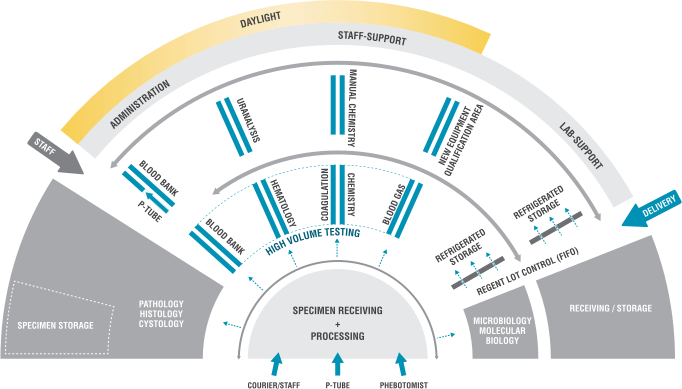
Finding the Waste in Existing Labs
For existing facilities, efficiency assessments often draw on Lean methodology's "8 wastes." Transportation waste appears when specimens or supplies move between locations and staff walk long distances; mapping staff and specimen travel helps reveal where improvement is possible. Excess inventory adds management burden and expiration risk. Waiting and bottlenecks emerge in the gaps between receiving specimens and loading analyzers, whether from insufficient staffing or undersized equipment; specimens sitting too long before centrifuging and analyzer capacity limited by pre-processing steps are classic examples. Inefficient motion at workstations and defects requiring retesting round out the usual suspects.
Diagnosing these problems requires mapping both material flow and information flow, often through a value stream map that makes the invisible delays visible.
Clinical labs may not generate headlines the way new patient towers do, but they sit at the center of nearly every treatment decision. Designing them around how work actually flows, rather than how rooms traditionally get counted, pays dividends in every result delivered.


